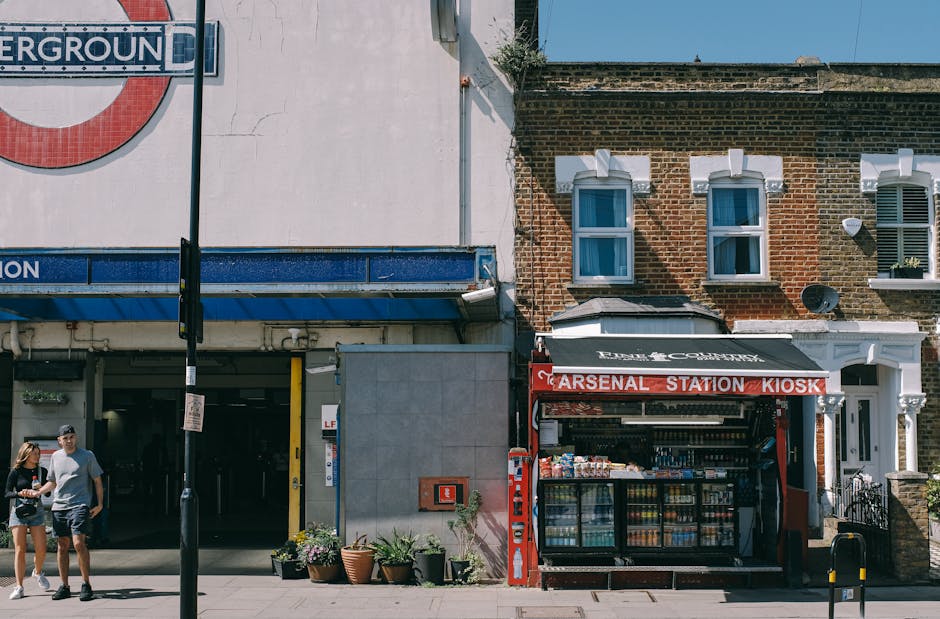
Woolwich Arsenal station bulky rubbish collection insider tips
If you are trying to clear bulky rubbish near Woolwich Arsenal station, the job can look simple at first and then turn a bit messy, fast. Sofas are awkward. Mattresses are bulky in the worst possible way. Broken furniture never seems to fit the lift, the hallway, or the back of the car. And if you are dealing with a flat, a rental turnover, a shop fit-out, or a post-renovation clear-out, the clock starts ticking sooner than you expect.
This guide to Woolwich Arsenal station bulky rubbish collection insider tips is written to help you plan the job properly, avoid common mistakes, and choose the right removal method for your situation. You will find practical advice on access around the station area, timing, permits, waste sorting, and when a simple collection is better than a more involved service. Truth be told, a little planning saves a lot of grief.
Where useful, we will also point you toward relevant local services such as professional rubbish removal, skip hire, and man and van support so you can match the solution to the waste, not the other way round.
Table of Contents
- Why Woolwich Arsenal station bulky rubbish collection insider tips Matters
- How Woolwich Arsenal station bulky rubbish collection insider tips Works
- Key Benefits and Practical Advantages
- Who This Is For and When It Makes Sense
- Step-by-Step Guidance
- Expert Tips for Better Results
- Common Mistakes to Avoid
- Tools, Resources and Recommendations
- Law, Compliance, Standards, or Best Practice
- Options, Methods, or Comparison Table
- Case Study or Real-World Example
- Practical Checklist
- Conclusion
- Frequently Asked Questions
Why Woolwich Arsenal station bulky rubbish collection insider tips Matters
Bulky waste is not just "big rubbish". It is the kind of waste that causes friction: old wardrobes blocking a landing, torn sofas too heavy for a stairwell, broken desks waiting in a corridor, and garden furniture that has seen one winter too many. Near Woolwich Arsenal station, those problems become even more noticeable because access can be tight, parking can be limited, and the area can be busy with commuters, deliveries, and general day-to-day movement.
That is why practical, local-minded collection advice matters. If you get the wrong vehicle, the wrong timing, or the wrong disposal method, you can end up paying more, taking longer, or creating hassle for neighbours and building managers. The aim is simple: remove the bulky items quickly, legally, and with as little disruption as possible.
There is also a safety angle. Heavy furniture dragged down stairs can damage walls, flooring, and backs. Electrical items can contain parts that should not be mixed with general rubbish. And if you are dealing with waste from a renovation or office clear-out, sorting it properly matters for both compliance and cost. A little care here is not overkill. It is just sensible.
Expert summary: The best bulky rubbish collection is rarely the one that looks cheapest on paper. It is the one that matches your access, timing, waste type, and volume without causing delays or avoidable extras.
How Woolwich Arsenal station bulky rubbish collection insider tips Works
At a practical level, bulky rubbish collection near Woolwich Arsenal station usually follows a straightforward pattern: identify the items, estimate the volume, choose the right removal method, book a time slot, and prepare the waste so the collection is quick on the day. Sounds obvious, but the difference between a smooth job and a clunky one is often in the preparation.
Some people need a one-off collection for a sofa, bed frame, or a few awkward items. Others are clearing a whole property and need a more structured solution, such as house clearance or garage and loft clearance. For builders, landlords, and businesses, the requirement may be broader again, with mixed waste needing builders waste removal or commercial skip hire.
Usually, the provider will want to know:
- what items need removing
- roughly how much waste there is
- whether the items are upstairs, outside, or in a tight access point
- if parking, permits, or timed access are likely to be an issue
- whether any items need special handling, such as appliances or confidential material
That first conversation matters. It helps prevent underestimating the load and avoids the classic, slightly painful moment when everyone discovers the sofa simply will not squeeze through the front door. Been there? Not ideal.
If your waste is not suitable for a normal collection, the provider may suggest a different option such as wait and load skip hire, grab hire services, or a more targeted rubbish removal visit. The best operators will guide you to the method that is least disruptive and most efficient for the site conditions.
Key Benefits and Practical Advantages
Good bulky rubbish collection does more than remove clutter. It solves a logistics problem.
- Less physical strain: You are not hauling heavy items down stairs or across pavements yourself.
- Faster turnaround: A well-planned collection can free up a room, hallway, or property in hours rather than days.
- Better access planning: Near a busy station area, the right timing can make the job much smoother.
- Cleaner finish: Items are removed in one go, rather than sitting around in stages.
- Reduced disposal mistakes: Furniture, appliances, and mixed waste can be handled correctly from the start.
- More suitable for awkward properties: Flats, maisonettes, and tight terraces often benefit from a flexible collection rather than a larger, fixed solution.
There is another advantage people sometimes forget: peace of mind. When bulky waste is sitting around, it becomes visual noise. You keep walking past it. You keep meaning to sort it. It gets in the way of cleaning, moving, decorating, or renting the space out. Once it is gone, the whole place feels reset. Simple, but real.
For larger clear-outs, it may be worth comparing a collection with a domestic skip hire option. In some cases, a skip is more economical. In others, especially where access is awkward or waste needs loading quickly, collection is the better call.
Who This Is For and When It Makes Sense
This kind of service is useful for a wider range of people than you might think. It is not only for households getting rid of a single old sofa.
- Homeowners clearing out bulky furniture, broken appliances, or accumulated clutter
- Renters needing to leave a property tidy and avoid last-minute panic
- Landlords and letting agents preparing a flat for re-let
- Office managers removing old desks, chairs, and filing units
- Builders and trades handling mixed waste after work has finished
- Shop owners refreshing stockrooms, back areas, or display fixtures
- People with limited access where a skip is impractical or permit issues would slow everything down
It makes especially good sense if the waste is bulky but not especially heavy in aggregate, or if you need items taken from inside the property rather than left kerbside. If your waste includes a bit of everything, then services like man and van or a broader site clearance may be a better fit than a basic collection.
On the other hand, if you already have the items outside and ready, you might not need anything elaborate at all. That is the sort of judgement call a decent local provider should help you make.
Step-by-Step Guidance
If you want the collection to go smoothly, follow a simple process. It sounds almost too basic, but it works.
- Make a full item list. Include furniture, white goods, broken fittings, and any bagged waste that will go with them.
- Sort by type. Separate general bulky items from items that may need special handling, such as fridges or confidential paperwork.
- Measure the awkward pieces. Door width, stair turns, lift size, and corridor bends matter more than people expect.
- Check access. If a vehicle cannot park close enough, the job may need a different approach.
- Decide on the collection method. Choose between collection, skip, wait-and-load, or grab hire depending on access and volume.
- Book a realistic slot. Morning collections often work well near busy transport hubs because the street conditions are calmer.
- Prepare the items. Empty drawers, tape loose doors if needed, and move items to a sensible pickup point where possible.
- Keep pathways clear. That one detail can save a surprising amount of time.
- Confirm what cannot go. Do not assume everything can be mixed together. That is where awkward delays begin.
- Ask about recycling and disposal. A proper provider should be clear about what happens next.
If you are clearing multiple floors, do not leave this until the last minute. Start with the hardest items first. That usually means the biggest sofa, the broken wardrobe, or the fridge that seems to have grown overnight. Get those out of the way, and the rest feels manageable.
Expert Tips for Better Results
These are the small, practical things that make bulky rubbish collection easier near Woolwich Arsenal station.
1. Think in terms of access, not just volume
Two cubic metres of waste can be easy in one property and annoying in another. A flat above a busy road, with a narrow stairwell and no lift, is a different beast from a ground-floor storage room. The access route can matter as much as the amount of waste itself.
2. Keep fragile or messy items separate
If your bulky waste includes broken glass, leaking appliances, or dusty loft contents, isolate those items first. You do not want glass fragments hidden inside a sofa cover, and you definitely do not want damp or mould spreading across otherwise clean furniture.
3. Use the "one touch" rule
Handle each item once, not three times. Decide whether it is going, being kept, or being recycled. Repeated sorting creates clutter and slows the whole job. A quick sort by room often works best.
4. Photograph the load before booking
A couple of photos can help a provider judge the right service. This is especially useful for mixed household waste or rooms full of items that have been stacked in a less-than-orderly fashion. No judgement. We have all been there.
5. Time the job around the station area
Woolwich Arsenal station can be busy at peak times, so early collections are often easier than late-morning ones. If parking is tight, a short window with fewer pedestrians and less traffic can make a noticeable difference.
6. Consider lockable or enclosed options for sensitive loads
If the waste is valuable, confidential, or simply needs to stay out of sight until removal, an enclosed or secure option may be worth exploring. For some businesses and offices, enclosed and lockable skip hire is a sensible choice, especially if waste cannot sit exposed for long.
Small detail, big difference. That is the pattern with bulky rubbish collection.
Common Mistakes to Avoid
Most bad bulky waste jobs go wrong for the same few reasons. The good news? They are easy to avoid once you know what to look for.
- Underestimating the amount of waste: People often count items, but forget how much space they actually take up.
- Forgetting access restrictions: A collection can be delayed if there is no clear parking or loading space.
- Mixing unsuitable waste: Some items need separate handling, especially electricals or potentially hazardous materials.
- Leaving sorting until collection day: That usually turns a calm job into a rushed one.
- Not checking permit needs: If a skip is involved, you may need to think about local permission or placement rules. See skip permits and skip hire permits for more context.
- Choosing the wrong service: A collection, skip, grab lorry, or wait-and-load setup each solves a different problem.
One of the sneakiest mistakes is assuming the cheapest option is always best. Sometimes it is. Often it is not. If the "cheap" choice means you have to move everything twice, or wait around while access is sorted, the saving disappears pretty quickly. Annoying, but true.
Tools, Resources and Recommendations
You do not need fancy equipment for a bulky rubbish clear-out, but a few simple tools make life easier.
- Measuring tape: Useful for doors, lifts, stair bends, and awkward furniture.
- Gloves and sturdy shoes: Basic, but worth saying. Scrapes happen.
- Black bags or boxes: Good for loose small items that would otherwise scatter everywhere.
- Moving straps or a sack truck: Handy for heavier pieces if you are shifting them internally.
- Camera phone: Helpful for taking access photos before booking.
- Label tape: Great for marking keep, remove, and unsure piles.
As for service choices, the best recommendation is to match the tool to the job. If you have a mixed household clear-out, house clearance or rubbish removal may be the cleanest route. If you are clearing a rented space after tenants move out, office clearance and house clearance pages can help you compare the type of removal service needed.
For bulky domestic items such as old beds and sofas, it is worth checking mattress and sofa disposal and fridge and appliance removal if those items are part of the load. These are the items that often trip people up because they look simple until you are standing next to them, wondering how they got so massive.
Law, Compliance, Standards, or Best Practice
With waste removal, compliance is mostly about common-sense best practice backed by proper handling. You do not need to become a waste law expert to do things properly, but you do need to avoid cutting corners.
Here are the practical standards to keep in mind:
- Use a responsible carrier: Waste should be transported and disposed of by a provider that handles it properly and can explain the process clearly.
- Do not mix hazardous waste with general bulky rubbish: Certain items need separate disposal routes.
- Keep documentation where relevant: For commercial work, it is sensible to retain job details, waste descriptions, and booking information.
- Follow site rules: Flats, estates, offices, and managed buildings often have their own access and loading expectations.
- Think about recycling: Many bulky items can be broken down into component materials rather than treated as one mixed load.
If your load includes anything potentially risky, it is better to slow down and ask first. That applies to chemicals, paint tins, fridges, fluorescent tubes, and other awkward items that do not belong in a normal general rubbish collection. For those situations, hazardous waste disposal is the safer route.
Best practice also means being honest about the waste before booking. If you are not sure whether something is acceptable, say so. A careful provider would rather know in advance than discover a problem half-way through the job. Saves everyone a headache.
Options, Methods, or Comparison Table
When you are dealing with bulky rubbish near Woolwich Arsenal station, there are usually four realistic choices. Each one has its place.
| Method | Best for | Strengths | Trade-offs |
|---|---|---|---|
| Bulky rubbish collection | Single items, mixed household waste, quick removals | Fast, convenient, less lifting for you | May cost more than self-loading for large volumes |
| Skip hire | Larger clear-outs, ongoing work, DIY or renovation waste | Flexible loading, good for multi-day projects | Needs space and possibly a permit |
| Wait and load | Short loading jobs with limited parking | No skip left on site, useful in busy areas | Requires you to be ready on time |
| Grab lorry hire | Heavy, loose, or awkward waste piles | Good reach, quick removal of larger volumes | Not ideal for loads that need careful sorting |
In many station-area situations, the deciding factor is access. If the street is tight, a wait-and-load arrangement or direct collection may beat a skip every time. If the waste is more construction-focused, then construction waste disposal or builders skip hire may be the more efficient fit.
Case Study or Real-World Example
Here is a realistic example from the kind of job people often face around Woolwich Arsenal station. A couple were moving out of a first-floor flat and had left the awkward items until the last week: a tired sofa, a broken bed base, two wardrobes that had already been dismantled badly, and a fridge-freezer that no longer worked. They also had a few boxes of mixed clutter in the hallway and were worried about parking because the building sat on a busy road not far from the station.
Instead of trying to solve everything with one guess, they photographed the items, measured the stairwell, and asked for advice before booking. That made the access decision much easier. The sofa was too awkward for the stairs, so it was broken down. The fridge was handled separately. The mixed clutter was bagged and grouped. Because the loading point was tight, the collection was timed for a quieter part of the morning.
What changed the result was not brute force. It was preparation. The whole job felt less stressful because the plan matched the property, not just the rubbish list. That is really the whole point of bulky rubbish collection insider tips: do the thinking before the van arrives, and the day goes much better.
In a different scenario, a small office near the station needed old filing cabinets, worn chairs, and a few boxes of confidential paperwork removed. In that case, a combination of confidential shredding and a commercial clearance approach made more sense than a single bulky-item pickup. Different job, different answer.
Practical Checklist
Use this checklist before you book or schedule the collection.
- List every bulky item, not just the obvious ones
- Measure doorways, stair turns, and lift dimensions if items must come from inside
- Take photos of the waste and access route
- Separate general waste from electricals, appliances, and anything questionable
- Decide whether collection, skip hire, wait-and-load, or grab hire suits the job
- Check whether parking or loading restrictions may affect the appointment
- Clear pathways and remove small obstacles in advance
- Ask what happens to reusable or recyclable material
- Keep paperwork or booking details for commercial jobs
- Confirm the collection time and any special access notes
If the waste is spread across a house, loft, shed, or garage, it can help to start with the least-used space first. That way the visible clutter drops quickly, and you feel progress straight away. Nice little morale boost, which matters more than people admit.
Get a free quote today and see how much you can save.
Conclusion
The smartest approach to Woolwich Arsenal station bulky rubbish collection is not just to remove items quickly, but to remove them in the right way for the space, the timing, and the type of waste involved. Near a busy station, that means thinking about access, parking, loading time, and whether a collection, skip, wait-and-load service, or grab hire is the better fit.
When you prepare properly, bulky waste stops being a nuisance and becomes a solvable task. That is the real insider tip. Not magic, not guesswork, just a calm plan and a provider that understands local logistics. If you want to compare options, start with pricing and quotes, review what can go in a skip, and learn more about waste recycling services so you know exactly what to expect.
And if you are still staring at that one awkward sofa or the pile in the corner, do not worry. Get the plan right first, and the rest tends to follow.
Frequently Asked Questions
What counts as bulky rubbish near Woolwich Arsenal station?
Bulky rubbish usually means large household or commercial items that are awkward to move or too big for normal bins. Think sofas, beds, wardrobes, tables, chairs, office furniture, and some appliances.
Is bulky rubbish collection better than skip hire?
It depends on access and volume. If you have limited space, awkward stairs, or just a few large items, collection is often easier. If you have a larger ongoing load, skip hire may be better.
Can I leave bulky items outside my property for collection?
Sometimes, yes, but it depends on the arrangement and local access conditions. It is usually better to confirm placement in advance so the collection is straightforward and does not block pedestrians or neighbours.
Do I need a permit for bulky rubbish collection?
Usually not for a standard collection, but if you are using a skip on a public road, permit rules may apply. That is where skip permits become relevant.
What should I do with fridges, freezers, or washing machines?
Appliances often need separate handling because of their materials and components. It is best to check appliance-specific removal options such as fridge and appliance removal.
Can I mix furniture with renovation waste?
Sometimes mixed loads are fine, but not always. If the waste includes plaster, wood, rubble, or construction debris, a more suitable service may be builders waste removal or construction waste disposal.
How do I avoid delays on collection day?
Clear access, group the waste neatly, separate questionable items, and provide photos or a clear description when booking. Small prep like that saves a lot of back-and-forth.
Is same-day bulky rubbish collection possible?
Sometimes it is, depending on availability and location. If speed matters, look at same-day skip hire or ask whether a quick turnaround collection is available.
What happens to the waste after it is collected?
That depends on the item type and the service used. A responsible provider should sort, reuse, recycle, or dispose of the waste appropriately where possible. If sustainability matters to you, ask about recycling and sustainability.
How much space do I need for bulky rubbish collection?
You need enough room for the items to be handled safely and for the vehicle or crew to access them. The exact space depends on the property, the route out, and whether the waste is already outside.
What if my items are too awkward to move by myself?
That is exactly when a professional service becomes worth it. Heavy sofas, mattress sets, large cabinets, and stacked mixed items can be difficult and risky to move without help.
Can I use bulky rubbish collection for office clear-outs?
Yes, in many cases. Offices often need furniture, screens, filing cabinets, and boxed waste removed together. For larger business jobs, office clearance or commercial skip hire may be the better route.
How do I choose between rubbish removal and wait and load?
If the waste is already outside or can be loaded quickly, wait and load can be very efficient. If you need the crew to remove items from inside, a standard rubbish removal service is usually more suitable.
Who do I contact if I want to discuss my options?
If you need guidance on the most practical approach, start with contact us or browse the company background on about us before booking.